How we work

Scoped projects, fixed prices, a stated end date.

The model is deliberately harder for us to sell and much easier for you to leave.

The shape of a project

Three stages, and you can stop after the first

1

A free scoping call, about forty minutes, to work out what the actual problem is. Some of these end with us saying you do not need an agency.

2

A written proposal: the outcome, the deliverables, the fixed price and the end date. No options tiers designed to make the middle one look sensible.

3

We do the work, in the open, with a shared document you can read at any point. At the end you get everything, including the things that failed.

Three painted blocks in a row, one for each stage
A blank card, a pen and a coffee on the studio desk

Rates are published

Our day rate and our typical project prices are on the services page. An agency that will not tell you a number until it has qualified your budget is pricing you rather than the work, and you can feel it later in the invoice. Publishing it means we lose some enquiries early, which is the point.

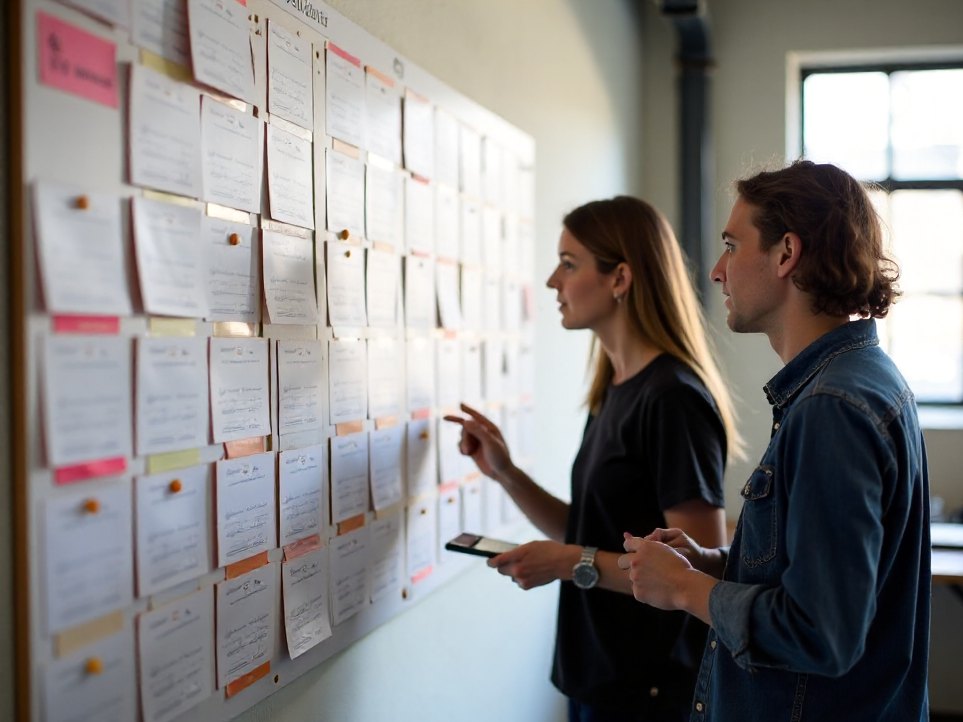
Two people talking beside a studio board of work pinned in columns

The work happens in the open

You get access to the working document from day one, not a polished reveal in week six. It is messier and occasionally uncomfortable, and it means nothing lands as a surprise at the end. Clients who have been burned by a big reveal tend to appreciate this most.

Two colleagues reviewing printed results across a table, plainly and without ceremony

We report what failed

Every final report has a section on what did not work and what we would not repeat. Marketing is a field with a great deal of unfalsifiable reporting in it, and the fastest way to be useful is to be the agency that tells you when the answer is no.

What you get

Four things in every project

Regardless of size, and included in the price.

A strategist in a tailored jacket standing in a converted warehouse studio

A real proposal

Outcome, deliverables, price, dates and what is explicitly out of scope. Usually three pages, never thirty.

A short standing catch-up between colleagues at a studio desk

Weekly updates

Short, written, every week, including the weeks where the honest update is that we are stuck.

A box of finished project files and printed samples being handed across a desk

Everything handed over

Source files, accounts, documentation and passwords. Nothing is held to make leaving difficult.

A notebook and pen on the studio desk

A final report

What we did, what happened, what failed and what we would do next. Written to be readable by someone who was not in the room.

Common questions

Asked on scoping calls

If yours is not here, phone and ask. We answer these ourselves.

Do you really not do retainers?

We do ongoing work, but as a series of scoped projects with defined outcomes rather than an open-ended monthly fee. If you need a fixed monthly spend for budgeting, we can structure it that way — what we will not do is bill for a month in which nothing agreed was delivered.

Are you not too small for us?

Possibly. Six people cannot run a national broadcast campaign and we will tell you so rather than subcontract it badly. What six people can do is give you the person who did the thinking rather than the person who was free.

What if we do not like the work?

Say so at the weekly update rather than at the end, and it gets changed. If a project genuinely goes wrong, we will finish it, refund the final stage and part on good terms. That has happened twice and both clients came back.

Who actually does the work?

The people you meet. There is no account layer and no juniors quietly delivering what a director sold. If we need a specialist we do not have, we will name them, tell you what they cost us, and add nothing on top.

Can you guarantee results?

No, and be careful of anyone who does. We can guarantee the deliverables, the dates and the honesty of the reporting. Outcomes depend on your product, your market and a good deal of luck, and pretending otherwise is how the industry got its reputation.


Do you sign NDAs?

Yes, before any specifics are discussed, if you would like one in place before the scoping call.

Book a scoping call. If we are not right for it, we will say so on the call.

Forty minutes, free, and no proposal unless you want one. Some of these calls end with us recommending you do it in-house.

Scroll to Top